
HAM Radio Event at Swansboro Airport Hangers June 26th
June 15, 2021 by Roger Stenbock W1RMS
Thank you Robert Kirkpatrick KI6HNA for organizing this years Field Day at Swansboro. He said “Are you a HAM Radio operator or have you ever had in interest in HAM Radio or emergency communications? On Saturday, June 26th a group of local HAM Radio operators will be setting up remote HAM Stations at the airport hangers to participate in the yearly nation wide “field day” event. This event allows HAM Radio operators across the country to brush up on there off grid radio skills as though there was a local emergency. There will be technical presentations on antenna’s and transmission line testing. If you are a HAM Radio operator and wish to join in, contact Rob at: robk@01cl.com for more information. This is a great event to bring your children to exposed them to the hobby. There are many aspects to the hobby and we will try to answer all questions you may have. This event starts at 11:00am and runs through 3:00pm. A hotdog lunch will be served at noon. Hope to see you there.”
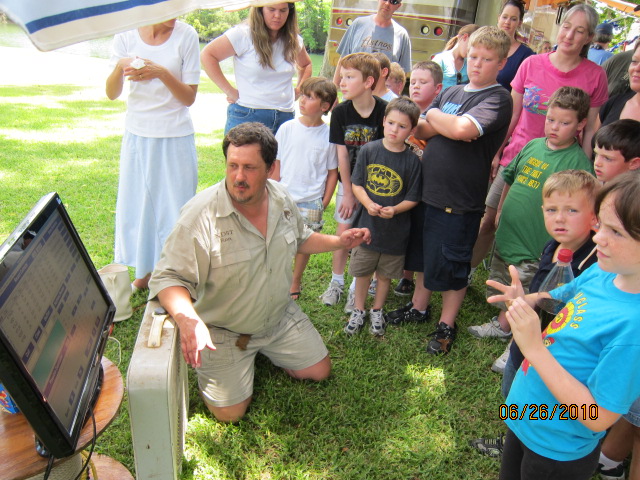
Get the kids involved in ham radio. Here they are looking up call signs on QRZ
at past years field day
Here is some more background. Field Day is an annual amateur radio exercise, widely sponsored by IARU regions and member organizations, encouraging emergency communications preparedness among amateur radio operators. In the United States, it is typically the largest single emergency preparedness exercise in the country, with over 30,000 operators participating each year. Field Day is always the fourth full weekend of June, beginning at 18:00 UTC Saturday and running through 20:59 UTC Sunday.
Since the first ARRL Field Day in 1933, radio amateurs throughout North America have practiced the rapid deployment of radio communications equipment in environments ranging from operations under tents in remote areas to operations inside Emergency Operations Centers (EOCs). Operations using emergency and alternative power sources are highly encouraged, since electricity and other public infrastructures are often among the first to fail during a natural disaster or severe weather.
To determine the effectiveness of the exercise and of each participant’s operations, there is an integrated competitive component, and many clubs also engage in concurrent leisure activities (e.g., camping, cookouts). Operations typically last a continuous twenty-four hours, requiring scheduled relief operators to keep stations on the air. Additional contest points are awarded for experimenting with unusual modes, making contacts via satellite, and involving youth in the activity.
Hope to see you then 73

 Community Blog